
Short Answer
Few plants evoke the same sense of paradox as the cactus—both forbidding and inviting, alien yet familiar. Its spiny silhouette, a masterclass in evolutionary ingenuity, conceals a labyrinth of names, classifications, and historical narratives that have evolved alongside human curiosity. The history of cactus nomenclature is not merely a dry catalog of Latin binomials; it is a living testament to exploration, misconception, and the relentless human drive to impose order on the wild. From the sun-baked deserts of the Americas to the meticulous herbariums of Europe, the naming of cacti has mirrored our shifting understanding of nature itself. Why, then, does the act of naming these plants feel so deeply personal, as if each label carries a fragment of the desert’s soul?
The Genesis of Cactus Classification: From Indigenous Wisdom to Colonial Curiosity
The first whispers of cactus nomenclature emerged not from dusty academic tomes, but from the oral traditions of Indigenous peoples across the Americas. Long before Linnaeus penned his *Species Plantarum*, the Nahua, Zapotec, and Pueblo peoples had already bestowed names upon these resilient succulents, often weaving them into myths of resilience and survival. The Spanish conquistadors, however, saw these plants through a lens of utility and wonder, coining terms like *cardón* (for columnar cacti) and *nopal* (for prickly pear). Yet, these names were descriptive rather than taxonomic—they lacked the precision demanded by the emerging science of botany.
The true metamorphosis began in the 16th and 17th centuries, as European naturalists encountered cacti during voyages of discovery. The German physician and botanist Leonhart Fuchs, in his 1542 *De Historia Stirpium*, attempted to classify these “strange American plants” under the genus *Opuntia*, though his descriptions were more poetic than precise. The challenge lay in the cactus’s defiance of European botanical norms—its succulent stems, ephemeral flowers, and nocturnal blooms resisted the rigid frameworks of the time. It was as if the cactus, in its very morphology, was mocking the human compulsion to categorize.
The Linnaean Revolution: Order Amidst the Spines
Enter Carl Linnaeus, whose 1753 *Species Plantarum* sought to impose order on the chaos of the natural world. His binomial system—genus and species—provided a lifeline for cactus taxonomy, though it was not without its early stumbles. Linnaeus himself struggled with the cactus’s variability, initially grouping them under *Cactus* (a genus now restricted to a single species, *Cactus quadrangularis*). His contemporaries, such as Philip Miller in *The Gardeners Dictionary* (1768), expanded the classifications, but the lack of standardized descriptions led to rampant misidentifications.
The real breakthrough came with the work of Adrian Haworth, an English botanist whose 1812 *Synopsis Plantarum Succulentarum* introduced the concept of *tribes* within cacti, distinguishing between columnar, globular, and epiphytic forms. Haworth’s approach was revolutionary because it acknowledged the cactus’s diversity beyond mere morphology—it hinted at ecological niches and evolutionary adaptations. Yet, even Haworth’s system was flawed, as it relied on limited specimens and overlooked the vast cactus populations in South America.
The Golden Age of Cactus Exploration: Adventurers and Herbarium Hunters
The 19th century heralded a golden age of cactus discovery, as explorers like Alexander von Humboldt and Aimé Bonpland traversed the Americas, documenting species with a fervor bordering on obsession. Humboldt’s *Personal Narrative of Travels* (1814–1829) described cacti as “the sentinels of the desert,” their spines a testament to nature’s resourcefulness. Meanwhile, in the herbariums of Europe, botanists like Karl Schumann and Alwin Berger began to refine classifications, introducing genera such as *Echinocactus* and *Mammillaria* based on subtle differences in areole structure and floral morphology.
This era also saw the rise of cactus cultivation in European greenhouses, where horticulturists like Friedrich Scheer cultivated rare species for private collections. The demand for exotic cacti fueled a black market of sorts, with specimens smuggled across borders and sold to wealthy patrons. Yet, this commercialization came at a cost—many species were overharvested, and some were lost to science before they could even be named. The irony is palpable: the very plants that symbolized endurance were being pushed to the brink by human fascination.
The Modern Era: DNA and the Unraveling of Cactus Evolution
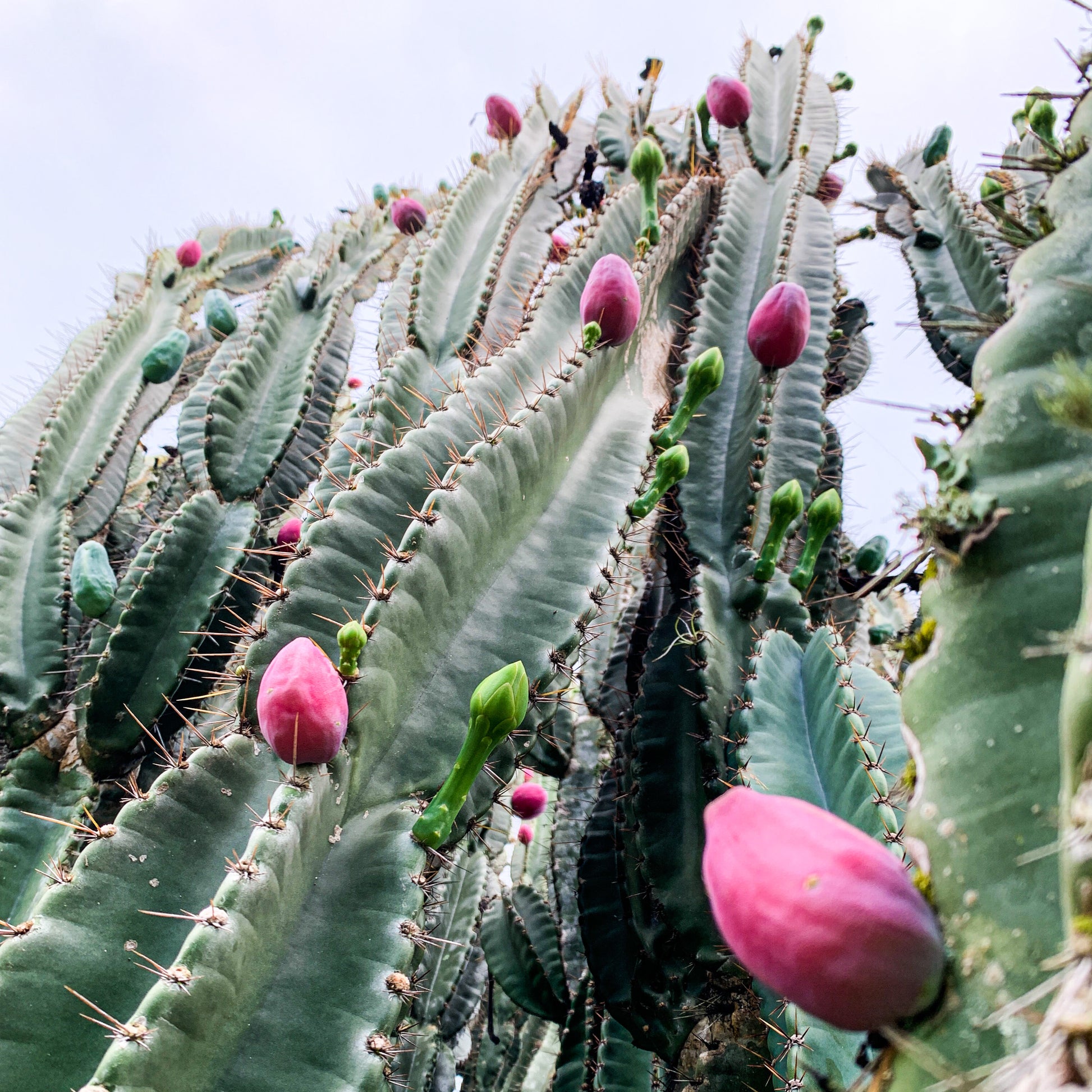
The 20th century brought a seismic shift in cactus nomenclature with the advent of molecular biology. Suddenly, the rigid hierarchies of the past gave way to a more fluid understanding of evolutionary relationships. Studies by botanists like Edward F. Anderson and Nigel Taylor revealed that many “classic” cactus genera were polyphyletic—meaning they had evolved independently from non-cactus ancestors. The genus *Cereus*, for example, was found to be a catch-all for unrelated columnar species, leading to its fragmentation into more precise groups like *Pilosocereus* and *Cephalocereus*.
Today, the International Cactaceae Systematics Group (ICSG) continues to refine classifications, using techniques like DNA barcoding to resolve long-standing disputes. One of the most fascinating discoveries has been the close genetic ties between cacti and other succulents, such as the African *Euphorbia*. This suggests that the cactus’s iconic traits—succulence, spines, and CAM photosynthesis—evolved independently in multiple lineages, a phenomenon known as convergent evolution. It’s as if the cactus, in its silent resilience, has been whispering secrets to those willing to listen.
The Cultural Resonance of Cactus Names: More Than Just Labels
To study cactus nomenclature is to confront a deeper truth: names are not neutral. They carry the weight of history, politics, and even emotion. The genus *Ferocactus*, for instance, derives from the Latin *ferox* (fierce), a nod to its intimidating spines. Yet, in Mexican folklore, the same plant is called *biznaga*, a term that evokes both its utility (as a water source for travelers) and its spiritual significance in indigenous cosmology. Similarly, the *Saguaro* (*Carnegiea gigantea*)—a towering icon of the Sonoran Desert—is revered in Tohono O’odham culture as a symbol of life and endurance, its name a bridge between science and myth.
Even the act of renaming a cactus can spark controversy. When the genus *Echinocactus* was split into multiple genera in the late 20th century, purists decried the loss of familiar labels, while modernists hailed the new precision. This tension reflects a broader cultural anxiety: our need to both preserve tradition and embrace progress. The cactus, with its ancient lineage and modern relevance, embodies this duality perfectly.
The Future of Cactus Nomenclature: Challenges and Ethical Considerations
As climate change reshapes desert ecosystems, cactus nomenclature faces unprecedented challenges. Many species are now critically endangered, their habitats shrinking under the weight of human expansion. The ICSG’s work is no longer just academic—it is a race against extinction. Yet, taxonomy itself is not immune to ethical dilemmas. Should a newly discovered cactus be named after its collector, even if that collector’s methods were exploitative? How do we balance the need for precise classification with the preservation of indigenous knowledge?
Perhaps the most profound question is this: as we refine the names of cacti, are we also refining our relationship with the natural world? The cactus, after all, has survived for millions of years without a single Latin binomial. Its spines, its flowers, its silent endurance—these are its true names. And maybe, just maybe, that’s enough.

FAQ
What is cactus nomenclature?
Cactus nomenclature refers to the naming and classification of cactus species based on historical, cultural, and scientific methods.
Who are the key figures in cactus nomenclature history?
Key figures include Carl Linnaeus, who developed the binomial naming system, and Adrian Haworth, who introduced the concept of tribes within cacti.


Leave a Reply