
Short Answer
In the evolving narrative of water conservation, cacti have emerged not just as resilient desert dwellers but as pivotal players in innovative technological approaches. Their inherent ability to thrive in arid conditions offers a blueprint for pioneering water-saving methods that blend nature’s wisdom with modern ingenuity. Exploring the intersection of cacti biology and cutting-edge technology reveals a fascinating realm where sustainability is redefined and water scarcity can be more effectively addressed.
Understanding the Intrinsic Water Retention Abilities of Cacti
Cacti possess an extraordinary capacity to conserve water, a trait honed over millennia in some of the most unforgiving environments on Earth. Their succulent stems act as natural reservoirs, storing copious amounts of moisture within specialized tissues. This remarkable adaptation reduces water loss through transpiration and allows survival through prolonged droughts.
At a microscopic level, cacti exhibit a unique stomatal behavior; these pores open at night rather than during the day in a process known as Crassulacean Acid Metabolism (CAM) photosynthesis. This adaptation minimizes water loss while still permitting essential gas exchange. Modern technology draws inspiration from this mechanism, aiming to replicate CAM processes in engineered systems to optimize water usage in agriculture and landscaping.

Biomimicry: Harnessing Cacti Forms in Water-Conserving Design
Biomimicry, the practice of emulating nature’s models, finds a rich source of innovation in cacti morphology. Their ribbed structures and spiny exteriors serve multiple purposes—from channeling water toward the roots to deterring herbivores—each of which has informed human engineering strategies. For instance, architectural designs now mimic the ribbed surfaces of cacti to capture and funnel scarce rainfall efficiently.
Water harvesting technologies inspired by cacti employ similar principles: capturing dew, directing condensation, and minimizing evaporation. Innovative irrigation systems incorporate these design elements to reduce water waste, particularly in urban landscapes and arid zones where water conservation is paramount. These bio-inspired blueprints illustrate how observing natural forms can drive technological breakthroughs.

Technological Innovations Leveraging Cacti Physiology
Recent advances have leveraged the physiological traits of cacti to develop new materials and sensors geared towards water preservation. Researchers have extracted natural hydrogel substances from cacti to create superabsorbent polymers, which significantly enhance soil moisture retention. This method diminishes the frequency of irrigation, offering tremendous water savings in agriculture and gardening.
Additionally, scientists are developing biosensors inspired by cactus tissues to monitor soil hydration levels with unprecedented precision. These sensors mimic how cacti sense and respond to water availability, providing real-time data that inform irrigation schedules. Integrating such technology leads to smarter water management systems that reduce waste and promote optimal plant growth.
Cacti in Sustainable Landscaping: Reducing Water Footprints
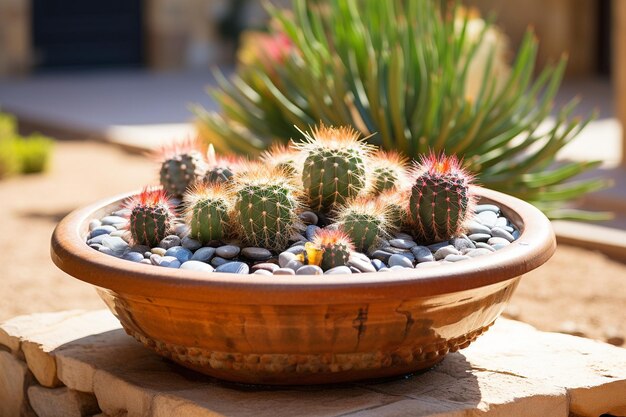
Incorporating cacti into landscaping is more than an aesthetic choice; it is a transformative strategy for reducing water consumption. Xeriscaping, a landscaping method that uses drought-tolerant plants like cacti, significantly lowers irrigation demands without sacrificing visual appeal. By using native cactus species, landscapes become not only sustainable but also resilient to the challenges posed by climate variability.
Water conservation in landscaping also benefits from soil amendments inspired by cacti’s ability to retain moisture. Techniques such as mulching and utilizing porous substrates replicate the microenvironment around cactus roots, thereby maintaining hydration longer. This holistic approach blends traditional horticulture with cutting-edge science, fostering environments that thrive with minimal water input.
Future Prospects: Integrating Cacti-Based Technologies in Urban Water Systems
The horizon of water conservation technology increasingly highlights the integration of cacti-inspired innovations into urban infrastructure. Emerging smart water systems seek to incorporate biomimetic materials that emulate cactus water retention, enabling cities to capture and reuse greywater and rainwater more efficiently. This convergence of biological insight and engineering promises substantial reductions in municipal water consumption.
Moreover, vertical gardens and green roofs populated with drought-resistant cacti represent a forward-looking solution to urban heat islands while mitigating water usage. These living systems not only enhance air quality and biodiversity but also act as natural buffers against extreme weather, providing multifunctional benefits alongside conservation goals.

Educational and Community Engagement Through Cacti Conservation Projects
Beyond technological advances, cacti serve as powerful educational tools to promote water stewardship. Community gardens and conservation programs featuring cacti foster awareness of indigenous plant strategies and their role in sustainable living. These initiatives encourage behavioral change by demonstrating practical water-saving techniques rooted in natural adaptation.
Furthermore, interactive exhibits and digital platforms that showcase cacti’s contribution to water conservation inspire innovation and environmental responsibility. By linking scientific knowledge with everyday practices, they empower individuals and communities to adopt conscientious water usage habits, reinforcing the societal impact of this fascinating plant genus.
In summary, cacti transcend their venerable desert origins, offering abundant inspiration for advancing water conservation technology. Their biological marvels continue to inform and transform human strategies, weaving sustainability into the fabric of technological progress. Embracing cacti’s lessons paves the way toward a future where water resilience and ecological harmony coexist seamlessly.
FAQ
How do cacti conserve water?
Cacti conserve water through succulent stems that store moisture, stomata that open at night (CAM photosynthesis), and specialized tissues that reduce transpiration.
What is biomimicry and how is it related to cacti?
Biomimicry is the emulation of nature’s designs and processes. Cacti inspire biomimicry in water-harvesting technologies and architectural designs that improve water efficiency.
How are cacti used in sustainable landscaping?
Cacti are used in xeriscaping to reduce irrigation needs, and their water-retentive properties inspire soil amendments that maintain hydration longer.
What technological innovations have been inspired by cacti?
Innovations include superabsorbent polymers derived from cactus hydrogels and biosensors modeled on cactus tissue to monitor soil moisture.
Can cacti-inspired technology help urban water systems?
Yes, cacti-inspired biomimetic materials can improve water capture and reuse in urban infrastructure, and drought-resistant cacti in green roofs help reduce water usage.



Leave a Reply