
Short Answer
There’s something almost poetic about the resilience of a Parodia cactus—those globular, ribbed sentinels of the arid world, their spines catching the light like the bristles of a brush dipped in liquid silver. They thrive where others wither, their existence a quiet rebellion against the tyranny of excess moisture. Yet, even these desert-born survivors can be undone by the very thing that sustains most life: water. The paradox of the Parodia is this: it demands water to live, but too much is a death sentence. The key to nurturing these spiny marvels lies not in the quantity of water, but in the wisdom of its absence.
The Myth of the Thirsty Cactus: Why Less Is More
We’ve all heard the adage: “Cacti don’t need much water.” But for the Parodia, this isn’t just a suggestion—it’s a survival strategy etched into its very biology. These plants hail from the sun-baked landscapes of South America, where rainfall is a fleeting guest, arriving in brief, dramatic bursts before vanishing for months. Their roots, shallow and wide, are designed to absorb every precious drop in an instant, storing it in their fleshy bodies like a camel’s hump. But here’s the catch: their water-storage tissues are delicate. When overwatered, they swell beyond capacity, rupturing like an overfilled waterskin. The result? A slow, soggy demise that begins with root rot and ends in a mushy, unrecognizable heap.
This isn’t just about avoiding a soggy death, though. Overwatering disrupts the Parodia’s natural rhythms. In the wild, these plants enter a state of dormancy during the cooler, drier months, conserving energy and water. When we douse them in our well-meaning but misguided attempts to “keep them happy,” we force them out of sync with their own biology. The spines, those intricate works of evolutionary art, lose their vibrancy. The ribs, once taut and proud, become soft and flaccid. The plant, in essence, forgets how to be a cactus.
The Art of the Dry Spell: Mastering the Watering Interval
So, how often should you water a Parodia? The answer isn’t a fixed schedule but a dance—a delicate balance between observation and restraint. During the growing season, which typically spans spring and summer, a deep watering every two to three weeks is usually sufficient. But here’s the twist: the soil must be bone-dry between waterings. Stick your finger an inch into the soil. If it’s damp, resist the urge. If it’s dry as the desert air, then—and only then—should you reach for the watering can.
As autumn’s chill creeps in, the Parodia’s needs shift. Reduce watering to once a month, or even less if temperatures drop. Winter is the plant’s time to rest, to slow its metabolism and conserve resources. Watering during this period is like rousing a hibernating bear—it disrupts a vital survival mechanism. And in the height of summer? Be cautious. The heat may tempt you to water more frequently, but remember: the Parodia’s roots aren’t built for constant moisture. A light misting every few weeks is all it needs to endure the scorching days.
The type of water matters, too. Tap water, with its chlorine and minerals, can accumulate in the soil over time, creating a toxic brew that the Parodia’s roots can’t escape. Rainwater or distilled water is ideal, but if that’s not an option, let tap water sit out for 24 hours before using it. This allows some of the harshest chemicals to dissipate, sparing your plant from chemical burns.
The Soil’s Secret: A Foundation for Survival
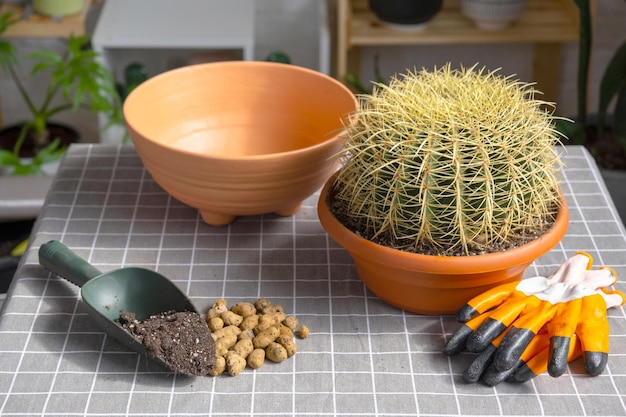
A Parodia’s fate is often sealed long before the first drop of water touches its soil. The medium in which it grows is just as critical as the water itself. Standard potting soil is a death trap for these desert dwellers—it retains too much moisture, suffocating the roots and inviting rot. Instead, opt for a gritty, fast-draining mix. A blend of cactus soil, perlite, and coarse sand (in a 2:1:1 ratio) mimics the rocky, nutrient-poor terrain of its native habitat. This isn’t just about drainage; it’s about replicating the conditions where the Parodia thrives.
Pot choice is equally important. A container with drainage holes is non-negotiable. Without them, excess water has nowhere to go, pooling at the roots like a stagnant puddle. Terracotta pots are ideal—they’re porous, allowing moisture to evaporate from the sides, and their weight provides stability for these top-heavy plants. Plastic pots, while lightweight, trap moisture and can lead to overheating in the sun. If you must use plastic, ensure the soil mix is extra gritty and water even less frequently.
Repotting is another critical moment. Every two to three years, or when the soil becomes compacted, it’s time to give your Parodia a fresh start. Gently remove it from its pot, shake off the old soil, and inspect the roots. Healthy roots are firm and white; any that are mushy or black should be trimmed away with sterilized scissors. Let the plant dry out for a day or two before placing it in its new home. This isn’t just about refreshment—it’s about preventing the spread of rot.
The Subtle Signs: Reading Your Parodia’s Silent Language
A Parodia doesn’t scream when it’s unhappy. It whispers, through a language of subtle shifts in appearance and behavior. Learning to read these signs is the difference between a thriving plant and a withering one. Start with the spines. If they’re dull or dropping, it’s a cry for help—often a sign of overwatering or insufficient light. The ribs, too, tell a story. Soft, puckered ribs indicate dehydration, while ribs that are too plump or mushy suggest excess moisture. The color of the plant can also be a giveaway. A healthy Parodia is vibrant, its green hues deep and rich. A yellowing or translucent appearance is a red flag, signaling that the plant is drowning.
Then there’s the matter of growth—or the lack thereof. A Parodia that’s receiving the right amount of water will grow steadily, its new spines emerging with a crisp, sharp definition. But if growth stalls, or worse, reverses into shrinkage, it’s a sign that something is amiss. This could be due to overwatering, but it could also be a lack of light or nutrients. Pay attention to the environment as a whole, not just the watering can.
Pests, too, can be a symptom of overwatering. Mealybugs and scale insects thrive in damp conditions, their presence a testament to the plant’s weakened state. If you spot these uninvited guests, don’t just treat the pests—address the root cause. Reduce watering, improve airflow, and consider isolating the plant to prevent the infestation from spreading.
The Deeper Fascination: Why We’re Drawn to These Spiny Survivors
There’s a quiet magic in nurturing a Parodia. These plants are more than just prickly ornaments; they’re living testaments to the power of adaptation. In a world where excess is often celebrated, the Parodia reminds us that less can be more. It teaches patience, restraint, and the art of observation. It asks us to slow down, to notice the subtle shifts in its appearance, to respect its boundaries.
Perhaps that’s why we’re so drawn to them. In an era of instant gratification, the Parodia offers a counterpoint—a lesson in delayed reward. It doesn’t bloom overnight. It doesn’t grow by leaps and bounds. Instead, it thrives in its own time, a slow and steady testament to the beauty of endurance. And when it finally rewards your care with a burst of flowers—vibrant, unexpected, and fleeting—it’s a reminder that the most precious things in life are often the ones we wait for.
So the next time you reach for the watering can, pause. Ask yourself: is this water, or is it a habit? Is this care, or is it control? The Parodia doesn’t need you to be its savior. It needs you to be its observer, its guardian, its silent partner in survival. And in that partnership, there’s a kind of quiet triumph—one that blooms not in the soil, but in the soul.
FAQ
How often should I water my Parodia cactus?
Water your Parodia cactus every two to three weeks during the growing season, allowing the soil to dry out completely between waterings.
What type of water is best for Parodia?
Rainwater or distilled water is ideal. If using tap water, let it sit for 24 hours to dissipate harmful chemicals.
What signs indicate overwatering in a Parodia cactus?
Signs include soft, mushy ribs, dull spines, and yellowing or translucent plant color.
Leave a Reply