
Short Answer
Have you ever stood in a sun-drenched desert, squinting against the glare, only to find yourself utterly captivated by the stark, sculptural beauty of agave and cactus pairings? There’s something almost mystical about these resilient plants—each spine, each curve, each shadow cast upon the parched earth tells a story of survival and quiet grandeur. But what if I told you that the secret to crafting a breathtaking desert garden isn’t just about planting a few spiky succulents and calling it a day? What if the real magic lies in the art of pairing, in the delicate dance between form, texture, and color that transforms a barren patch of soil into a living masterpiece? Let’s embark on this journey together, where every choice is a brushstroke, and every season brings a new layer of drama to your arid canvas.
The Alchemy of Contrast: Why Agave and Cactus Thrive Together
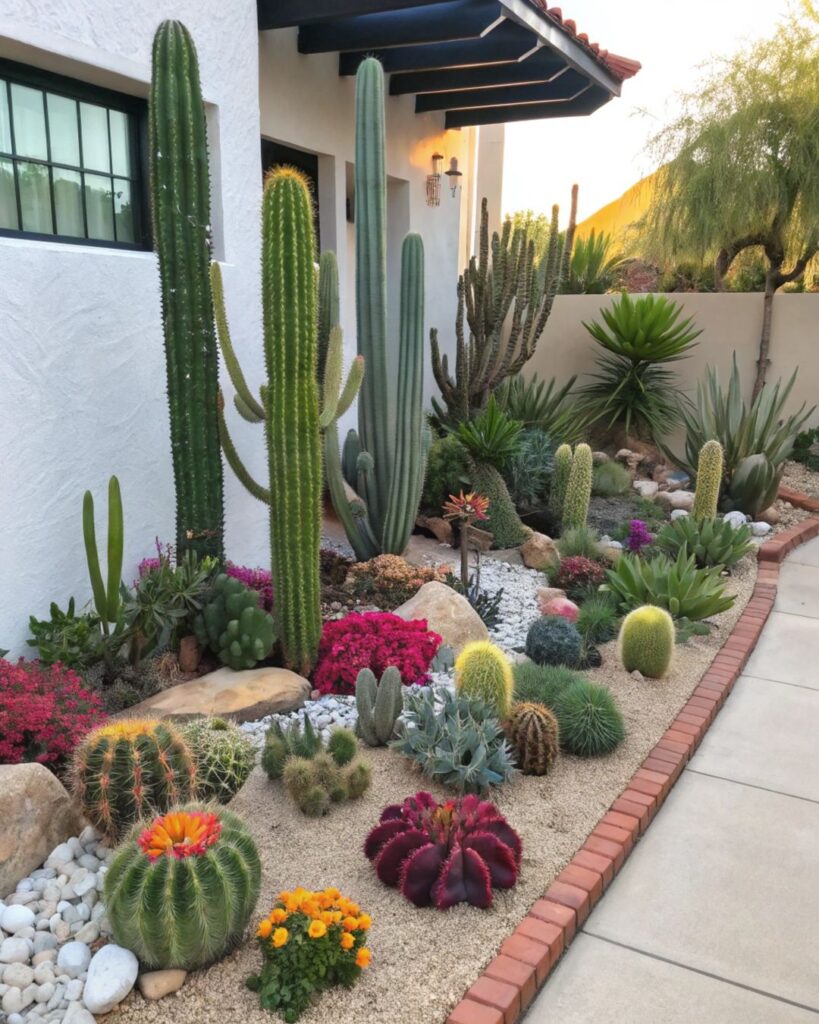
Picture this: a velvety expanse of blue-green agave leaves, their edges lined with delicate, almost lace-like filaments, standing sentinel beside a towering saguaro cactus, its ribs casting dramatic shadows across the sand. The contrast is electric. Agave, with its rosette form and often powdery or striped foliage, brings a sense of architectural precision to the garden. Cacti, on the other hand, are the wild, untamed rebels—some clad in spines like medieval armor, others draped in soft, fuzzy coats that beg to be touched (though, of course, we resist the urge).
This juxtaposition isn’t just visually stunning; it’s a survival strategy. Agave and cactus share a love for well-draining soil and minimal water, but their differing growth habits create a symphony of resilience. Agave’s broad, low-to-the-ground leaves shade the soil, reducing evaporation and creating a microclimate that benefits nearby cacti. Meanwhile, the cacti’s verticality draws the eye upward, adding height and drama to the composition. Together, they form a self-sustaining ecosystem where each plant plays a vital role in the garden’s survival.
But here’s the playful challenge: how do you balance their contrasting personalities without letting one species overpower the other? The answer lies in understanding their individual quirks and using them to your advantage.
Choosing Your Stars: Selecting the Perfect Agave and Cactus Pairings
The world of agave and cactus is vast, with over 200 species of agave alone and countless cacti varieties to choose from. To create a cohesive desert garden, you’ll need to curate your cast with intention. Start by considering the mature size of each plant—nothing disrupts a garden’s harmony faster than a towering specimen suddenly dwarfing its neighbors.
For a dramatic focal point, pair a Agave americana with its striking blue-gray leaves and formidable spines with a Ferocactus glaucescens, a barrel cactus whose ribbed, ribbed form echoes the agave’s geometric elegance. The contrast in color—one cool and muted, the other warm and golden—adds depth to the scene. Alternatively, for a softer, more whimsical look, try an Agave parryi ‘Truncata’ with its compact rosette and powdery blue hue alongside a Mammillaria elongata, or “ladyfinger cactus,” whose slender, finger-like protrusions create a playful texture.
Don’t overlook the power of color. Some agave varieties, like Agave ‘Blue Glow’, boast vibrant blue-green leaves with red margins that practically glow in the sunlight. Pair this with a Echinocactus grusonii, or “golden barrel cactus,” whose bright yellow spines will make your garden sing. The key is to think of your garden as a living palette, where each plant contributes a unique hue and texture to the overall composition.
Designing with Intention: Layout and Spacing for Maximum Impact
Now that you’ve selected your stars, it’s time to arrange them in a way that feels intentional and dynamic. Desert gardens thrive on rhythm and repetition, so consider grouping plants in odd numbers—three, five, or seven—to create a sense of natural abundance. Place taller cacti, like Carnegiea gigantea (saguaro), at the back of the garden, where their towering forms can serve as a backdrop for lower-growing agave and smaller cacti.
For a more modern, minimalist look, try a grid-like arrangement with precise spacing between each plant. This approach emphasizes the sculptural quality of agave and cactus, turning your garden into a living sculpture garden. Alternatively, for a wild, untamed feel, scatter your plants in a seemingly random pattern, allowing their natural growth habits to guide the eye. Just be sure to leave enough space between each specimen to prevent overcrowding—desert plants need room to breathe, and their roots compete fiercely for water in the wild.
And here’s a pro tip: think in layers. The foreground can feature low-growing agave like Agave ‘Marginata’ with its striking white margins, while the midground might include mid-sized cacti like Echinopsis hybrids, and the background could be dominated by a towering Agave tequilana or a cluster of Opuntia pads. This layered approach creates depth and invites the viewer to explore the garden from every angle.
The Soil’s Secret: Crafting the Perfect Desert Bed
No desert garden is complete without the right foundation. Agave and cactus despise soggy soil, so your first order of business is to ensure impeccable drainage. Start by amending your native soil with a generous helping of coarse sand, perlite, or pumice—anything to prevent water from pooling around the roots. If your soil is particularly heavy or clay-like, consider planting in raised beds or mounds to elevate the roots above the water table.
For an extra touch of authenticity, incorporate a top dressing of gravel or decomposed granite. Not only does this mimic the natural desert floor, but it also helps regulate soil temperature and reduces moisture loss. And don’t forget about mulch—though not in the traditional sense. A layer of small pebbles or crushed stone will keep the soil cool and discourage weeds without trapping moisture.
The challenge? Finding the right balance between moisture retention and drainage. Too much organic matter, and your plants will rot. Too little, and they’ll wither in the heat. Experiment with different soil mixes until you find the perfect blend for your climate and chosen species.
Watering with Wisdom: The Art of Restraint
Here’s where many aspiring desert gardeners stumble: overwatering. Agave and cactus are built for drought, and their roots will rot if they’re kept too damp. The golden rule? Water deeply but infrequently. For most regions, a thorough soaking every two to four weeks is sufficient during the growing season, with even less in the winter months when plants enter dormancy.
But how do you know when it’s time to water? Stick your finger into the soil—if it’s dry to the touch at least an inch down, it’s time to hydrate. And when you do water, do it at the base of the plant, avoiding the leaves and spines to prevent rot and fungal issues. A drip irrigation system can be a game-changer, delivering water directly to the roots without wetting the foliage.
The playful challenge? Resisting the urge to coddle your plants. It’s tempting to shower them with attention, but desert flora thrives on neglect. Trust in their resilience, and they’ll reward you with years of stunning growth.
Seasonal Shifts: Adapting Your Garden Year-Round
A true desert garden isn’t static—it evolves with the seasons, offering new delights with each passing month. In spring, your agave and cactus will burst into bloom, with towering flower spikes that attract pollinators and add a burst of color to the landscape. Agave’s blooms are particularly spectacular, often rising several feet above the rosette on a single stalk before bursting into a cascade of yellow or red flowers. Cacti, too, put on a show, with some varieties producing vibrant, trumpet-shaped blossoms that seem to defy the harsh environment.
Summer brings intense heat, and your garden will enter a period of dormancy. This is the time to step back and let your plants conserve energy. Mulch heavily to keep the soil cool, and provide light shade for younger or more delicate specimens. Avoid fertilizing during this period—your plants are resting, not growing.
As autumn arrives, the temperatures cool, and your garden will spring back to life. This is the perfect time to assess any damage from the summer heat and make adjustments to your layout or soil. Winter, meanwhile, is a time of quiet beauty. Frost-sensitive varieties may need protection, but many agave and cactus thrive in cooler temperatures, their spines and textures standing out against a backdrop of frost-kissed soil.
The challenge? Keeping your garden looking its best year-round. It’s easy to get caught up in the spring blooms and forget to plan for the quieter months. But with a little foresight, your desert garden can be a source of joy in every season.
Beyond the Basics: Creative Touches for a One-of-a-Kind Garden
Why stop at the ordinary when you can create something extraordinary? Consider incorporating non-plant elements to elevate your desert garden to new heights. A winding path of decomposed granite can guide visitors through the space, inviting them to explore every nook and cranny. Sculptural rocks, whether natural or hand-picked, add texture and a sense of rugged beauty. Even a simple birdbath or a small water feature can create a focal point, providing a refreshing contrast to the arid surroundings.
For a touch of whimsy, try adding decorative elements like terracotta pots, wrought-iron accents, or even a rustic wooden bench. These details soften the harsh lines of the plants and create a sense of harmony between the garden and its surroundings. And don’t forget about lighting—strategically placed solar-powered lights can transform your garden into a magical nighttime oasis, casting dramatic shadows and highlighting the sculptural forms of your agave and cactus.
The final challenge? Letting your personality shine through. Your desert garden should be a reflection of you—whether that means a sleek, modern design or a wild, untamed landscape. Don’t be afraid to take risks, to experiment, and to make mistakes. After all, the most stunning gardens are the ones that tell a story.
FAQ
Why should agave and cactus be paired in a garden?
Their contrasting forms and growth habits complement each other visually and ecologically, improving garden resilience and aesthetics.
What are the best soil conditions for agave and cactus?
Soil should be well-draining, amended with coarse sand or perlite, and kept relatively dry to prevent root rot.
How do I prevent overwatering my desert plants?
Water only when the soil is dry at least an inch below the surface, and use drip irrigation to target roots without wetting foliage.
How can I design my desert garden layout?
Use odd-number groupings, layer plants by height, and provide ample spacing to allow for growth and airflow.
Leave a Reply