
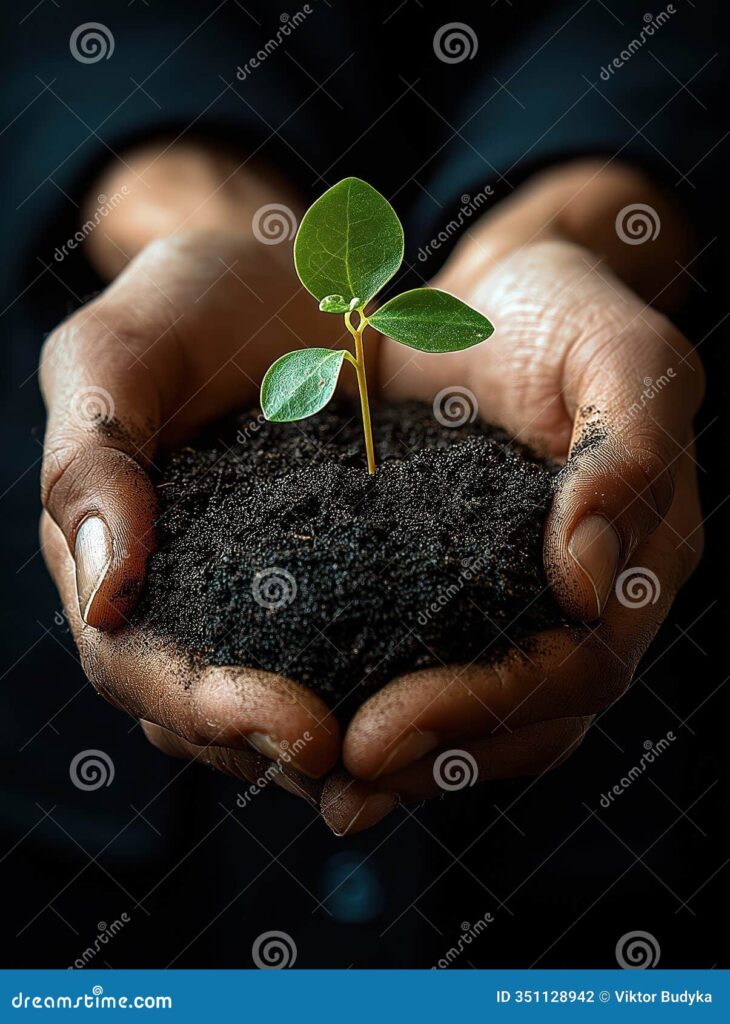
Short Answer
In the arid tapestry of the desert, where life is a whispered secret between the sun and the sand, the Ariocarpus seedling emerges as a defiant promise of renewal. These diminutive titans, cloaked in geometric armor, are not mere plants—they are living paradoxes, embodying resilience in a landscape that offers little mercy. To nurture an Ariocarpus from its embryonic cradle to a flourishing adult is to engage in a silent dialogue with time itself, a conversation where patience is the currency and observation, the guide. This journey, though delicate, is far from passive; it is an act of co-creation, a testament to the tenacity of life in the most unforgiving of terrains.
The Genesis: Understanding the Ariocarpus Seedling’s Unique Anatomy
The Ariocarpus seedling is a marvel of evolutionary frugality, a botanical prodigy that distills the essence of survival into its earliest form. Unlike the sprawling, leafy ambitions of its cousins, this seedling begins its life as a compact, almost geometric entity, its body a mosaic of tubercles arranged in a spiral that defies the chaos of its surroundings. Each tubercle is a fortress, a miniature citadel where moisture is hoarded like a miser’s gold, and the chlorophyll is sequestered in a way that minimizes water loss while maximizing photosynthetic efficiency.
The seedling’s root system is equally ingenious—a taproot that plunges deep into the substrate, seeking the cool embrace of the earth’s underbelly, while a network of fine, hair-like roots fans out like the tendrils of a spy, ready to absorb the slightest hint of moisture. The hypocotyl, that slender bridge between seed and soil, is a conduit of life, a living thread that weaves the seedling into the fabric of its environment. To care for an Ariocarpus seedling is to first understand this architecture, to recognize that every curve, every angle, is a calculated strategy for endurance.
The Crucible: Creating the Ideal Germination Environment
Germination is not merely the act of sprouting; it is the first skirmish in a lifelong battle against entropy. The Ariocarpus seedling demands a medium that is neither too generous nor too parsimonious—a balance between aeration and moisture retention. A mix of coarse sand, perlite, and a whisper of organic matter (think crushed granite or pumice) mimics the mineral-rich, nutrient-poor soils of its native habitat. The substrate must be porous enough to prevent waterlogging, yet cohesive enough to cradle the seedling’s delicate roots.
Temperature is the silent puppeteer in this drama. The Ariocarpus seedling thrives in the embrace of warmth, but not the searing kiss of direct sunlight. A consistent range between 70°F and 85°F (21°C–29°C) is ideal, a thermal sweet spot where metabolic processes hum without overheating. A heat mat can be a seedling’s best ally during the cooler months, a gentle nudge toward growth when the world outside is reluctant to cooperate. Humidity, too, must be managed with finesse—a light misting or a humidity dome can provide the moisture-laden air the seedling craves, but only in moderation. Too much, and the seedling drowns in its own potential; too little, and it withers before it has truly begun.
The Vigil: Watering with Precision and Patience
Water is both the elixir and the enemy of the Ariocarpus seedling. To water is to walk a tightrope between nourishment and suffocation. The key lies in the principle of episodic hydration—a method where water is delivered in infrequent, generous doses rather than frequent, superficial sips. The seedling must be allowed to experience the full cycle of drought and deluge, a rhythm that strengthens its root system and acclimates it to the harsh realities of its environment.
When the time comes to water, do so with intention. A thorough soaking, followed by an immediate return to dryness, encourages the seedling to stretch its roots in search of moisture, a behavior that will serve it well in maturity. Avoid the temptation to coddle; the Ariocarpus seedling is not a houseplant, nor is it a tropical orchid. It is a survivor, and its care must reflect that. Use room-temperature water to avoid shocking the delicate tissues, and always ensure the pot has adequate drainage—a flooded root system is a death sentence in slow motion.
The Art of Light: Illuminating the Path to Maturity
Light is the sculptor of the Ariocarpus seedling, shaping its form and dictating its destiny. Yet, this is not the blinding, unfiltered glare of the midday sun but the diffused, golden touch of dawn and dusk. In the wild, these seedlings grow nestled among rocks or partially obscured by the skeletal remains of their parent plants, where the light is gentle, almost reverent. Replicating this in cultivation means providing bright, indirect light—think of a south-facing window filtered through a sheer curtain, or a grow light set to a 12-hour photoperiod.
The seedling’s response to light is a dance of phototropism, where it bends and twists toward the source, seeking the energy it needs to photosynthesize. However, this must be balanced with the risk of etiolation, where the seedling stretches unnaturally in its quest for light, becoming weak and spindly. Rotate the pot regularly to ensure even exposure, and watch for signs of stress—paling coloration or elongated growth—as indicators that the light source needs adjustment. In time, the seedling will develop a compact, almost sculptural form, its tubercles arranged in a spiral that seems to defy gravity itself.
The Transition: From Seedling to Adult—When to Repot
There comes a moment when the Ariocarpus seedling outgrows its cradle, when the roots have stretched to the edges of the pot and the plant itself begins to assert its presence. This is the time for repotting, a delicate operation that requires as much finesse as the initial germination. The new container should be only slightly larger than the old—just enough to accommodate growth without drowning the seedling in excess space. A shallow, wide pot is often ideal, mimicking the natural spread of the plant’s roots in the wild.
Repotting is not merely a change of scenery; it is a rite of passage. The seedling must be gently extricated from its old home, its roots inspected for health, and any damaged or rotting sections trimmed away with sterilized tools. The fresh substrate should be a blend of the same mineral-rich components used for germination, with perhaps a touch more grit to ensure long-term stability. After repotting, withhold water for a week to allow the roots to acclimate and reduce the risk of infection. This is a period of vulnerability, but also of potential—when the seedling’s resilience will be tested and proven.
The Long Game: Sustaining Growth Without Stifling It
To care for an Ariocarpus seedling is to embrace a philosophy of benign neglect. These plants do not thrive on coddling; they thrive on the freedom to adapt, to evolve, to become exactly what they were always meant to be. Fertilization, if used at all, should be minimal and infrequent—a dilute solution of cactus-specific fertilizer applied only during the growing season, and even then, sparingly. Overfeeding is a fast track to a soft, etiolated plant, a shadow of its potential.
Pests are a rare but not impossible threat, particularly in the form of mealybugs or spider mites, which may lurk in the crevices of the tubercles. Vigilance is key; inspect the plant regularly, and if an infestation is detected, act swiftly with a targeted treatment—neem oil or insecticidal soap can be effective without harming the plant. But remember: prevention is always better than cure. A clean, uncluttered growing environment is the first line of defense.
The ultimate reward of this care is not just a thriving plant, but a living sculpture, a testament to the beauty of endurance. The Ariocarpus, with its geometric elegance and stoic demeanor, is more than a plant—it is a philosophy. It teaches us that strength is not found in excess, but in the deliberate, measured accumulation of resilience. To nurture one is to participate in a quiet revolution, a rebellion against the idea that life must be lush and abundant to be meaningful. In the desert’s embrace, the Ariocarpus seedling flourishes—not despite the harshness, but because of it.
FAQ
What is the best soil mix for Ariocarpus seedlings?
A mix of coarse sand, perlite, and a small amount of organic matter like crushed granite or pumice is ideal.
How often should I water Ariocarpus seedlings?
Water infrequently but generously, allowing the soil to dry out completely between waterings.
What light conditions do Ariocarpus seedlings prefer?
They thrive in bright, indirect light, similar to the filtered sunlight found in their natural habitat.
Leave a Reply