
Short Answer
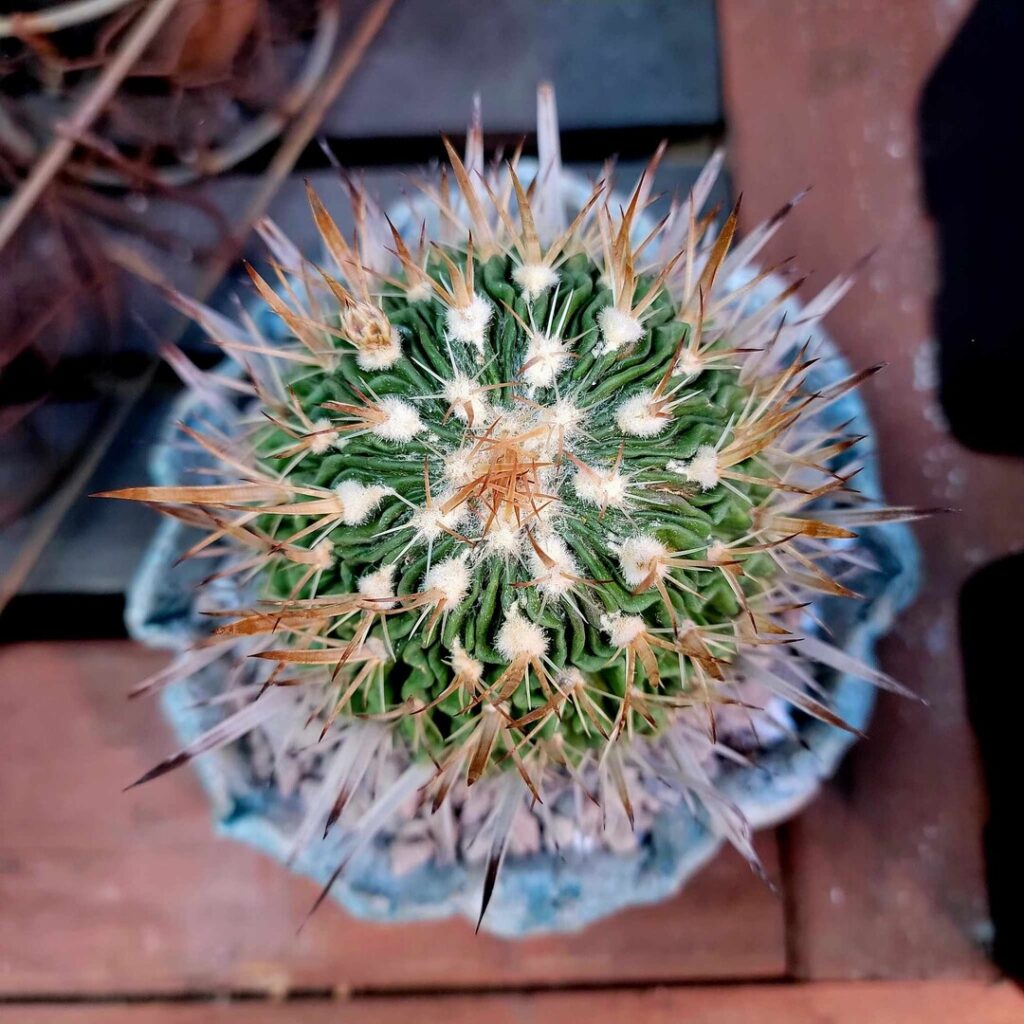
What if a single, undulating cactus could whisper the secrets of life’s ebb and flow? Meet the Stenocactus multicostatus, affectionately dubbed the Wave Cactus or Brain Cactus—a spiky sentinel of nature’s most mesmerizing paradox: rigidity and fluidity coexisting in perfect harmony. This isn’t just a plant; it’s a living metaphor, a botanical koan that challenges us to rethink resilience, adaptability, and the very rhythm of existence. So, let’s embark on a journey through the undulating ridges of this extraordinary succulent and uncover the profound symbolism it carries within its twisted, ribbed form.
The Wave Cactus: A Living Paradox of Structure and Serendipity
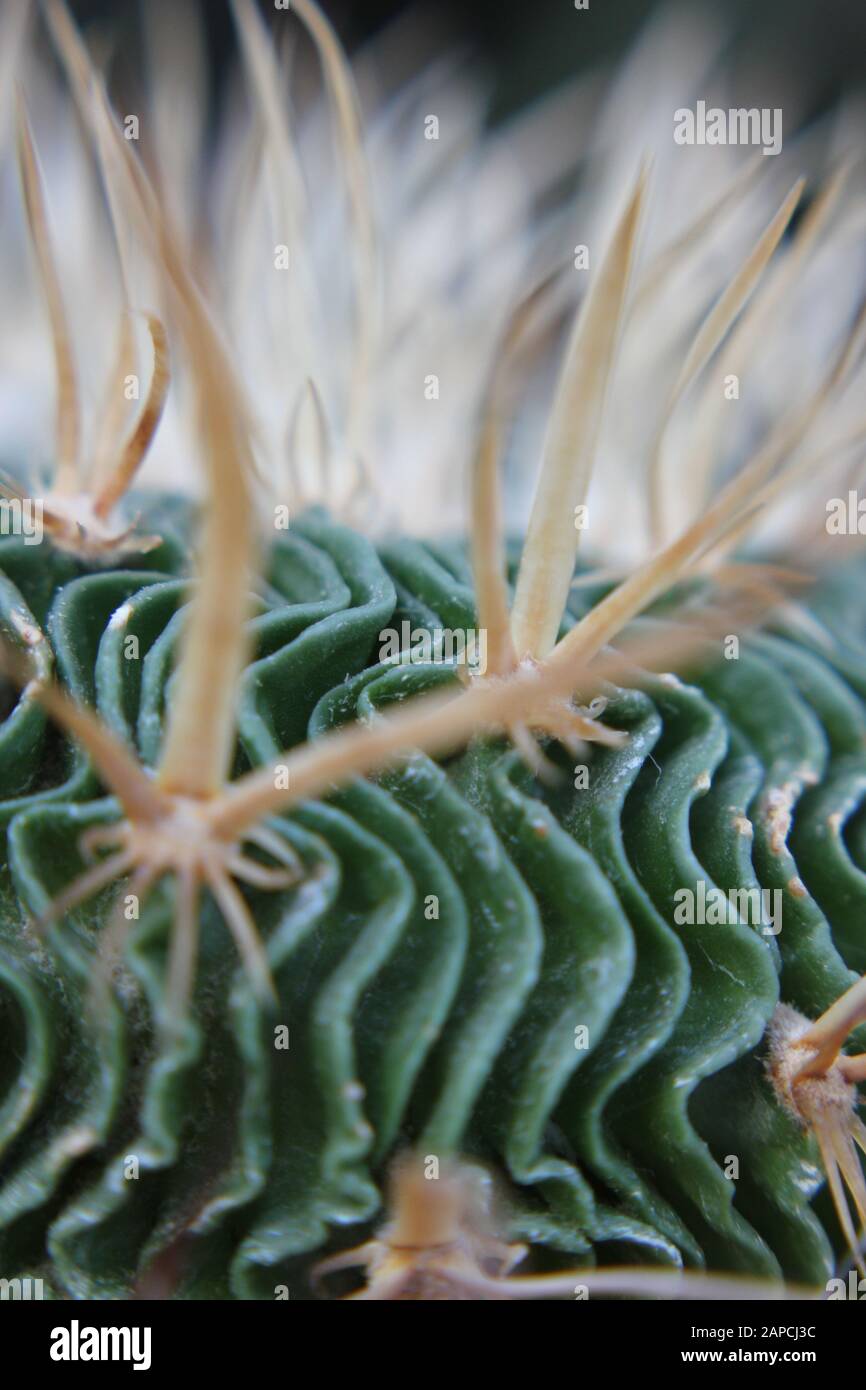
At first glance, the Stenocactus multicostatus appears as a geometric enigma—a cluster of wavy, brain-like ridges spiraling upward like the grooves of a vinyl record playing the soundtrack of the desert. But look closer. Those undulating ribs aren’t just decorative; they’re a masterclass in structural ingenuity. Each ridge acts as a natural buttress, distributing stress with the grace of a tightrope walker balancing on a wire. This cactus doesn’t just survive in harsh, arid landscapes; it thrives by turning adversity into artistry.
Consider the challenge it poses to conventional wisdom: we often associate strength with rigidity, yet here is a plant that bends without breaking, its form a testament to the power of yielding. The Wave Cactus teaches us that life’s most enduring structures aren’t always the most rigid—they’re the ones that dance with the wind, that ripple with the unseen currents of change. Could it be that our own resilience is measured not by how little we bend, but by how gracefully we adapt?
The Brain Cactus: Decoding the Language of Ridges
Dubbed the Brain Cactus for its uncanny resemblance to the convolutions of the human mind, Stenocactus multicostatus invites us to ponder the parallels between botany and cognition. Those twisting, turning ribs aren’t just a quirk of evolution—they’re a visual representation of complexity emerging from simplicity. Each ridge is a decision point, a fork in the road where growth could veer left or right, yet all paths converge into a singular, harmonious form.
Neuroscientists speak of neuroplasticity—the brain’s ability to rewire itself in response to experience. The Wave Cactus embodies this principle in stone and thorn. Its growth pattern suggests a mind constantly recalibrating, its structure a map of past struggles and future adaptations. What if we viewed our own life’s challenges as ridges on a cactus, each one shaping us into something more intricate, more capable? The Brain Cactus doesn’t just grow; it learns, its form a silent curriculum vitae of resilience.
Quantum Waves and the Flow of Existence
Now, let’s pivot to a realm where science and symbolism collide: quantum mechanics. The Wave Cactus, with its undulating ribs, mirrors the interference patterns of light waves—those ethereal dances of particles and energy that underpin the fabric of reality. In quantum theory, particles exist in superpositions, simultaneously waves and entities, until observed. The Stenocactus, too, exists in a state of perpetual motion, its ridges a frozen symphony of potential paths.
This is where the challenge arises: Can we, like the Wave Cactus, embrace the fluidity of existence without losing our core identity? Quantum particles don’t cling to a single state; they flow between possibilities. The cactus, too, doesn’t resist change—it is change, its form a testament to the beauty of impermanence. Perhaps the greatest lesson of the Stenocactus is this: to live fully is to oscillate between rigidity and surrender, to be both the observer and the observed in the grand experiment of life.

The Thorns of Existence: Protection as a Form of Grace
No discussion of the Stenocactus would be complete without acknowledging its formidable armor—those sharp, needle-like spines that guard its tender core. In symbolism, thorns often represent protection, a barrier against the world’s harshness. Yet, the Wave Cactus flips this narrative: its thorns aren’t just defensive; they’re decorative, a paradox of beauty and defense. They don’t just repel; they announce—a declaration that resilience can be as striking as it is sturdy.
Consider the challenge this poses to our own lives. How often do we soften our edges, dull our spines, in the name of conformity? The Stenocactus reminds us that protection need not be synonymous with invisibility. Its thorns are a reminder that strength can be both a shield and a statement, that vulnerability and fortitude can coexist like the ridges of a wave—one cresting, the other dipping, yet both essential to the rhythm.
Cultivating the Wave: Lessons from a Desert Survivor
For those who wish to invite the Wave Cactus into their lives—whether as a houseplant or a metaphorical companion—there are lessons to be learned. This cactus thrives in conditions that would wither most others: poor soil, scarce water, relentless sun. It doesn’t demand pampering; it demands understanding. To grow a Stenocactus is to adopt its philosophy: thrive where you’re planted, adapt to the rhythm of your environment, and let your form be a reflection of your journey.
The challenge, then, is to apply this mindset beyond the garden. Where in your life can you embrace the Wave Cactus’s ethos? Perhaps it’s in your career, where rigid plans give way to fluid opportunities. Maybe it’s in relationships, where love isn’t about control but about flowing together. Or perhaps it’s in your personal growth, where every setback becomes a ridge, shaping you into something more intricate, more resilient.
The Ripple Effect: How One Cactus Can Change Your Perspective
It’s easy to dismiss a plant as mere decoration, but the Stenocactus multicostatus is far more than that. It’s a living koan, a botanical riddle that asks us to reconsider our relationship with structure, change, and resilience. Its undulating ribs are a reminder that life isn’t a straight line—it’s a series of waves, each one carrying us forward while teaching us to ride the current.
So the next time you encounter a Wave Cactus, don’t just see a plant. See a teacher. See a mirror. See a challenge to your own rigidity, a call to flow with the rhythm of existence. Because in the end, the most profound symbolism isn’t found in grand gestures or lofty ideals—it’s found in the quiet, twisted ridges of a cactus that dares to bend without breaking.
And perhaps, just perhaps, that’s the secret to life itself.
FAQ
What does the Wave Cactus symbolize?
The Wave Cactus symbolizes resilience and adaptability, reflecting the balance between rigidity and fluidity in life.
Where does the Stenocactus multicostatus thrive?
The Stenocactus multicostatus thrives in arid desert regions, where it adapts to harsh conditions.



Leave a Reply