
Short Answer
Imagine a world where your cacti don’t just survive, but thrive—where each spiky sentinel bursts forth with vibrant blooms, defying the odds stacked against them. This isn’t some distant horticultural fantasy; it’s the reality within reach when you master the art of Rebutia seed germination. These diminutive yet resilient succulents, hailing from the high-altitude Andes, demand more than mere patience—they require a symphony of precision, intuition, and a touch of rebellious horticultural audacity. If you’ve ever watched a seedling wither despite your best efforts, it’s time to shatter the conventional wisdom and embrace a paradigm shift in how you nurture these botanical wonders.
The Myth of the “Easy” Cactus: Why Rebutia Defies Expectations
Rebutia cacti are often marketed as beginner-friendly, but this oversimplification does them a disservice. These plants are not just survivors; they are opportunists, seizing every advantage in their harsh native habitats. Their seeds, tiny and unassuming, carry the genetic blueprint for resilience—but they won’t germinate in the same way as a pansy or a tomato. The key lies in understanding their evolutionary quirks. Unlike their desert-dwelling cousins, Rebutia species evolved in regions where temperature fluctuations and seasonal rains create a fleeting window for germination. Mimicking these conditions isn’t just helpful—it’s essential.
Consider the vernalization process, a term borrowed from plant physiology that describes the cold-induced activation of seeds. Many Rebutia species require a period of chilling to break dormancy, a trait that ensures they germinate only when conditions are optimal. Skipping this step is like asking a hiker to summit Everest without acclimatizing to the altitude—possible, but fraught with unnecessary struggle. The first promise of faster growth? Respect the seed’s history. Give it the cold kiss of winter before coaxing it into life.
Soil Alchemy: Crafting the Perfect Germination Medium
If soil were a character in a novel, it would be the enigmatic mentor who shapes the protagonist’s destiny. For Rebutia seeds, the right medium isn’t just dirt—it’s a living ecosystem where moisture, aeration, and microbial life dance in delicate balance. Standard potting mixes are too dense, too organic; they suffocate the delicate roots before they even emerge. Instead, envision a blend that’s part mineral, part organic—a gritty, porous concoction that mimics the rocky crevices of the Andes.
Start with a base of coarse sand (think riverbed, not playground) and perlite, each comprising roughly 40% of the mix. The remaining 20% should be a high-quality, low-organic cactus mix or, better yet, pumice for its superior drainage properties. This isn’t just about preventing rot; it’s about creating an environment where the seedling can breathe. Add a sprinkle of biochar—a carbon-rich amendment that boosts microbial activity and retains just enough moisture to keep the seed hydrated without drowning it. The result? A medium that’s as nurturing as it is uncompromising.
The Temperature Tango: Choreographing the Ideal Germination Climate
Temperature isn’t just a number on a thermostat; it’s the conductor of the germination orchestra. Rebutia seeds are finicky maestros, demanding a precise thermal waltz. Too cold, and they slumber indefinitely. Too hot, and they cook before they can sprout. The sweet spot? A diurnal fluctuation between 68°F (20°C) at night and 86°F (30°C) during the day. This mimics the natural temperature swings of their Andean homeland, where nights are crisp and days are sun-drenched.
How to achieve this without a high-tech grow tent? Place your seed tray on a seedling heat mat set to 86°F (30°C) during daylight hours, then allow it to cool naturally at night. Alternatively, position the tray near a south-facing window where sunlight can warm the soil, but shield it from direct midday rays that could overheat the medium. For the truly ambitious, consider a DIY thermal mass—a brick or stone slab beneath the tray that absorbs heat during the day and radiates it slowly at night. The goal isn’t just warmth; it’s rhythm.
Light: The Silent Catalyst of Germination
Light is often an afterthought in germination guides, but for Rebutia, it’s the spark that ignites the process. These seeds don’t need full sun to germinate—they need indirect, diffused light, the kind that filters through a canopy of leaves in their native habitat. Direct sunlight can desiccate the seeds before they’ve had a chance to swell, while darkness leaves them in a vegetative limbo. The solution? A humidity dome with a sheer cloth draped over it to diffuse the light, or a north-facing windowsill that bathes the tray in gentle, even illumination.
Once the seeds sprout, the rules change. Seedlings crave light like a desert bloom craves rain—but they’re not ready for the scorching midday sun. Gradually acclimate them to brighter conditions over a week, starting with 12 hours of light and increasing to 16. This isn’t just about avoiding sunburn; it’s about training the seedlings to photosynthesize efficiently. Think of it as botanical boot camp—rigorous, but necessary for survival.
Patience vs. Persistence: The Psychological Game of Germination
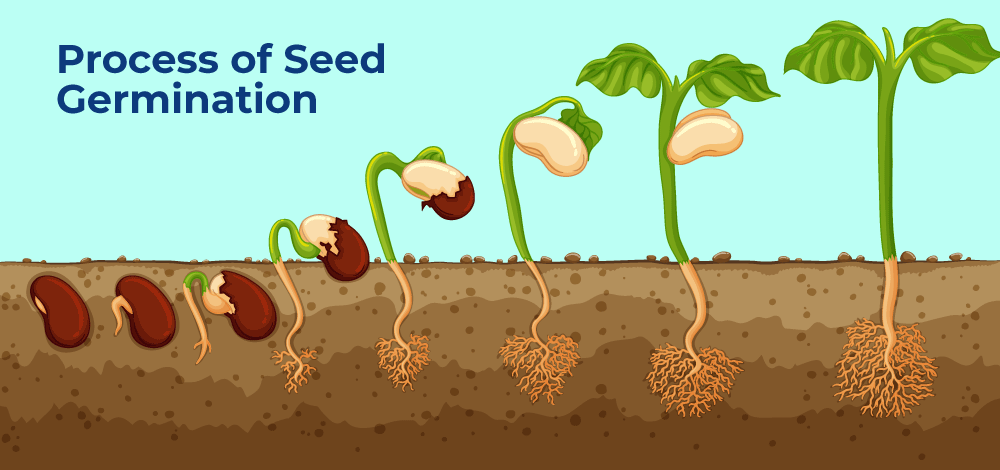
Germination is as much a mental marathon as it is a physical one. The first week will pass without a single sign of life, and doubt will creep in like a slow-moving fog. This is where strategic impatience comes into play. Resist the urge to dig up the seeds to check on them—each disturbance is a setback. Instead, trust the process. Mark the day you sowed the seeds on a calendar and treat the waiting period like a meditation. Observe the tray daily, but don’t touch it. The moment you see the first cotyledons (those tiny, embryonic leaves), you’ll know the gamble paid off.
For those who can’t bear the suspense, try the paper towel method as a diagnostic tool. Place a few seeds between damp paper towels in a sealed bag, then set it in a warm spot. Within days, you’ll see if the seeds are viable. This isn’t cheating—it’s strategic transparency. Once you confirm germination, transfer the sprouted seeds to your prepared medium with the delicacy of a neurosurgeon.
The Transplant Tango: From Seed to Seedling
Transplanting is where many gardeners stumble, but for Rebutia, it’s a rite of passage. The seedlings are fragile, their roots as delicate as spider silk. The key? Wait until they’re at least 1/4 inch (6 mm) tall and have developed two sets of true leaves. Use a pair of tweezers or a toothpick to gently lift them, ensuring you don’t damage the taproot. Plant them in the prepared medium, no deeper than the base of their cotyledons. Water lightly—just enough to settle the soil around the roots—then resist the urge to coddle them.
For the first week, keep the seedlings in high humidity (a humidity dome or a clear plastic bag with ventilation holes works wonders) to reduce transplant shock. After that, gradually reduce the humidity over a week, mimicking the transition from the moist Andean cloud forests to the drier air of their adult habitat. This isn’t just about survival; it’s about hardening them for the world ahead.
Fertilizer: The Double-Edged Sword of Early Growth
Fertilizer is a tool, not a crutch. In the early stages of Rebutia growth, less is more. A diluted, balanced fertilizer (10-10-10 or 5-5-5) applied at half strength every 4-6 weeks is plenty. Over-fertilizing leads to weak, etiolated growth—seedlings stretching toward the light like desperate sunbathers. Instead, focus on building a robust root system. Once the seedlings are established (after 3-4 months), you can increase the frequency slightly, but always err on the side of caution. Remember: these plants evolved in nutrient-poor soils. They don’t need coddling; they need challenge.
The Reward: A Garden of Miniature Marvels
When your first Rebutia blooms—a riot of red, orange, or yellow petals—it’s not just a flower. It’s a testament to your patience, your precision, and your willingness to defy conventional wisdom. These plants are more than succulents; they’re survivors, and by mastering their germination, you’ve unlocked the secret to growing not just a cactus, but a story. A story of resilience, adaptation, and the quiet triumph of nurturing life from the smallest of beginnings.
So go ahead. Break the rules. Embrace the cold. Dance with the light. Your Rebutia seeds are waiting—and they’re far more capable than you might think.
FAQ
What is the ideal soil mix for Rebutia seed germination?
A mix of coarse sand, perlite, and a low-organic cactus mix is ideal, comprising roughly 40% sand, 40% perlite, and 20% cactus mix.
How long does it take for Rebutia seeds to germinate?
Germination can take several weeks, depending on conditions, but patience is key as it may take up to a month for seeds to sprout.


Leave a Reply