
Short Answer
Have you ever found yourself staring into the velvety spines of a cactus, wondering which species could grace your windowsill with its presence? Among the vast desert tapestry of the Mammillaria genus, a few species stand out as the darlings of collectors and green thumbs alike. These tiny titans of the plant world pack a punch of charm, resilience, and sheer variety. But which ones should you invite into your collection? Let’s embark on a journey through the most popular Mammillaria species, where each turn reveals a new marvel of nature’s design.
The Quintessential Charm of Mammillaria plumosa: A Feathery Dream
Imagine a cactus so soft to the touch that it feels like a cloud had a baby with a succulent. That’s Mammillaria plumosa, the feather cactus, a species that defies expectations with its delicate, plume-like spines. Native to the arid landscapes of Mexico, this species is a master of illusion—its appearance is as gentle as its name suggests, yet it thrives in conditions that would wither lesser plants. The feathery spines, arranged in a radial pattern, create a mesmerizing texture that begs to be touched, though one must resist the urge to overindulge in its tactile allure.
Cultivating M. plumosa is a study in patience and precision. It prefers bright, indirect light and well-draining soil, a combination that mimics its natural habitat. Water sparingly, for this cactus is a survivor, storing moisture in its plump body to endure the harshest droughts. With proper care, it rewards its keeper with a crown of tiny, pinkish flowers that add a touch of whimsy to its already enchanting form. For collectors seeking a species that balances beauty and hardiness, M. plumosa is a non-negotiable addition to the collection.
The Bold and the Beautiful: Mammillaria elongata and Its Clustering Charms
If you’ve ever marveled at a cactus that seems to multiply like rabbits in a garden, you’ve likely encountered Mammillaria elongata, the so-called “gold lace cactus.” This species is a social butterfly, forming dense clusters of slender, cylindrical stems that spiral outward in a hypnotic dance. Each stem is adorned with golden spines that create a lace-like effect, earning it its poetic nickname. But don’t let its delicate appearance fool you—M. elongata is a tenacious survivor, thriving in both pots and rock gardens with equal aplomb.
The challenge with M. elongata
lies in its propensity to spread. Left unchecked, it can form sprawling mats that dominate a collection, a trait that delights some collectors and frustrates others. To maintain its compact form, regular pruning and repotting are essential. Place it in a sunny spot, and watch as it rewards your efforts with cheerful, funnel-shaped flowers in shades of pink or white. For those who love a cactus with personality and a touch of wild abandon, M. elongata is a must-have.
The Spiky Enigma: Mammillaria hahniana and Its Crown of White Wool
Meet Mammillaria hahniana, the “old lady cactus,” a species that wears its age with pride. Named for the dense, white woolly crown that adorns its crown, this cactus exudes an air of regal elegance. The spines, arranged in a radial pattern, are short and curved, giving the plant a fluffy, almost comical appearance. But beneath its whimsical exterior lies a plant of remarkable resilience, capable of enduring the harshest conditions with grace.
Growing M. hahniana is a lesson in subtlety. It thrives in bright light but can tolerate partial shade, making it a versatile choice for both indoor and outdoor settings. The key to its success lies in well-draining soil and minimal watering—this is a cactus that prefers to be ignored rather than coddled. When in bloom, it produces a profusion of pink or purple flowers that emerge from the woolly crown, creating a striking contrast against the white wool. For collectors who appreciate a cactus with character and a touch of the unexpected, M. hahniana is a true gem.
The Miniature Marvel: Mammillaria vetula and Its Diminutive Delights
In a world where bigger is often equated with better, Mammillaria vetula stands as a testament to the beauty of small things. This tiny cactus, with its globular stems and short, white spines, is a master of understatement. Its name, derived from the Latin word for “old,” hints at its slow-growing nature, a trait that endears it to collectors who appreciate patience and precision. Despite its diminutive size, M. vetula packs a punch of charm, making it a favorite among miniature plant enthusiasts.
Cultivating M. vetula requires a gentle touch. It prefers bright light and well-draining soil, but it is intolerant of overwatering. The challenge lies in providing just enough moisture to keep it thriving without succumbing to the dreaded rot. When in bloom, it produces small, white flowers that add a touch of elegance to its already refined form. For those who love a cactus that punches above its weight, M. vetula is a perfect choice.
The Floral Showstopper: Mammillaria magnimamma and Its Spectacular Blooms
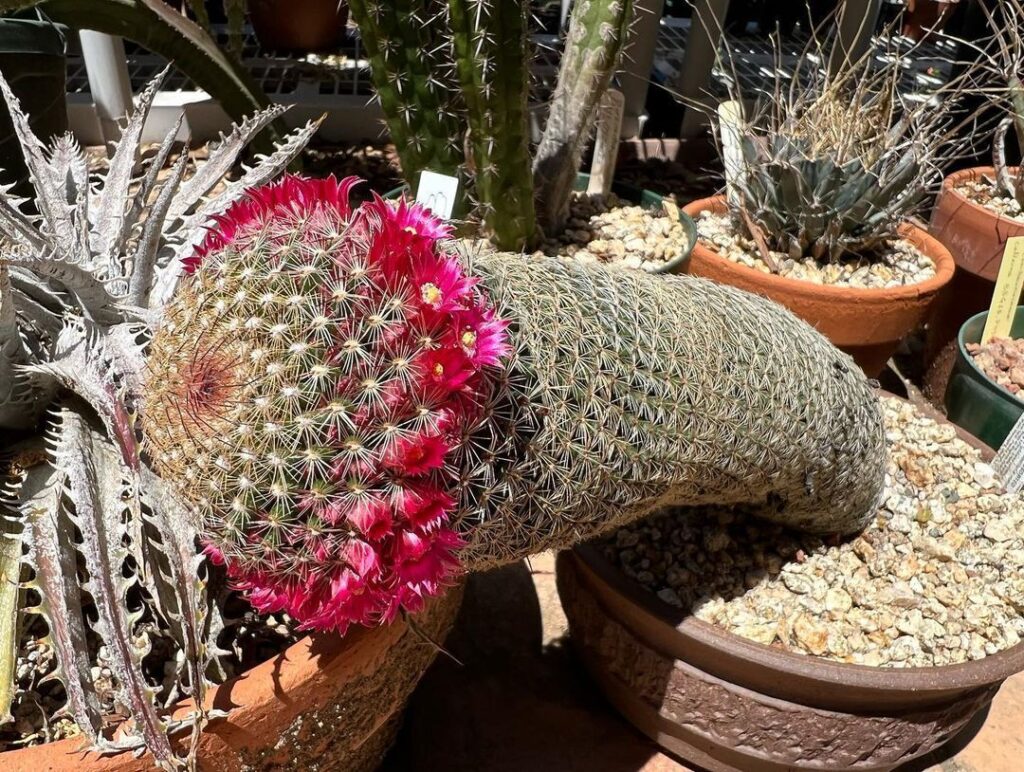
If you’ve ever dreamed of a cactus that could double as a floral centerpiece, look no further than Mammillaria magnimamma, the “big nipple cactus.” Named for its distinctive, nipple-like tubercles, this species is a true showstopper. Its globular stems are covered in dense, white spines, creating a striking contrast against the vibrant green of the plant. But the real magic happens when it blooms. In spring, M. magnimamma produces a profusion of pink or purple flowers that emerge from the top of the plant, creating a crown of color that is nothing short of breathtaking.
The challenge with M. magnimamma lies in its size. As it matures, it can grow to be quite large, requiring ample space and regular repotting. It thrives in bright light and well-draining soil, but it is intolerant of overwatering. For collectors who love a cactus with a flair for the dramatic, M. magnimamma is a must-have. Its bold form and spectacular blooms make it a standout in any collection.
The Ultimate Challenge: Collecting Mammillaria Species
Now that we’ve explored some of the most popular Mammillaria species, it’s time to address the elephant in the room: the challenge of collecting them. With over 200 species to choose from, the world of Mammillaria is vast and varied, a veritable playground for plant enthusiasts. But with great variety comes great responsibility. Each species has its own unique care requirements, and what works for one may spell disaster for another. The key to success lies in research, patience, and a willingness to learn from mistakes.
The rewards, however, are well worth the effort. There’s nothing quite like the satisfaction of watching a tiny, unassuming cactus grow into a thriving specimen, its spines and flowers a testament to your care and dedication. Whether you’re a seasoned collector or a newcomer to the world of cacti, the Mammillaria genus offers endless opportunities for discovery and delight. So go ahead, take the plunge. Your windowsill is waiting.
FAQ
What are the most popular Mammillaria species?
Some of the most popular Mammillaria species include Mammillaria plumosa, Mammillaria elongata, Mammillaria hahniana, Mammillaria vetula, and Mammillaria magnimamma.
How do I care for Mammillaria cacti?
Mammillaria cacti generally prefer bright, indirect light, well-draining soil, and should be watered sparingly to prevent rot.




Leave a Reply